
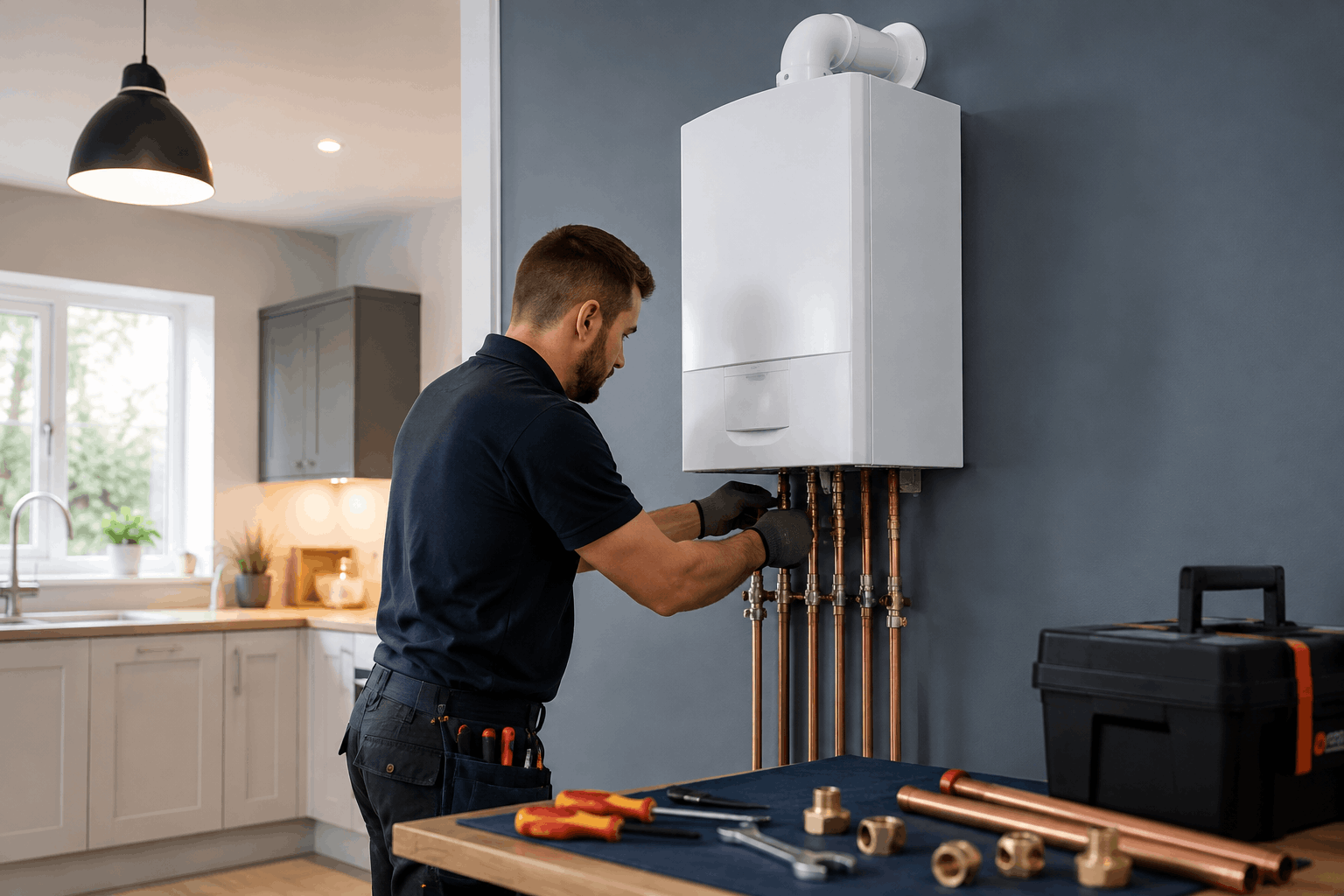
Having a new boiler fitted isn’t exactly the sort of home improvement you want dragging on. If your old boiler has stopped working, especially in the middle of winter, you’ll probably want to know one thing before anything else: how long does a boiler installation take?
For a straightforward replacement, where a new boiler is fitted in roughly the same position and the existing system doesn’t require major alterations, installation can often be completed within one working day. More complicated jobs may take two or three days, while substantial heating-system changes can take longer.
The important point is that “boiler installation” can describe several very different jobs. Replacing one combi boiler with another is quite different from removing an old conventional system, taking out water tanks and converting the property to a combi boiler.
Here’s what UK homeowners should realistically expect.
Typical Boiler Installation Times
There isn’t one installation time that applies to every property, but these are useful general estimates:
|
Type of Boiler Installation |
Typical Time |
|
Like-for-like boiler replacement |
Around 1 day |
|
New boiler with some pipework changes |
1–2 days |
|
Moving a boiler to another location |
1–2+ days |
|
Conventional/system boiler to combi conversion |
2–3 days |
|
Major heating system alterations |
2–4+ days |
These should be treated as practical estimates rather than guaranteed times. The condition of the existing heating system, accessibility and unexpected problems can all affect the schedule.
Why a Like-for-Like Boiler Replacement Is Usually Faster
The quickest installation is normally replacing an existing boiler with a similar type in the same location.
For example, imagine you already have a wall-mounted combi boiler in your kitchen and you’re replacing it with another compatible combi boiler. If the existing pipework, gas supply, flue arrangement and heating system are suitable, there may be relatively little alteration required.
The engineer still has plenty to do. The old boiler needs to be safely disconnected and removed, the new unit installed and connected, and the entire installation properly checked and commissioned.
However, keeping the same basic configuration removes many of the jobs that make a boiler installation longer.
That’s why a simple replacement can frequently be finished during the same working day.
Changing Boiler Type Usually Takes Longer
The answer to how long does a boiler installation take changes considerably if you’re switching to a different type of heating system.
UK homes generally use combi, system or regular/conventional boilers. These systems don’t all work in exactly the same way.
Combi boilers, for example, provide heating and hot water without requiring a separate hot water cylinder. System and conventional arrangements may include a cylinder and, depending on the system, additional components.
Energy Saving Trust notes that combi boilers require less space because they don’t need a hot water cylinder, while system boilers can be more suitable for households with higher hot water demand.
Converting from an older conventional arrangement to a combi boiler can therefore involve:
- Removing redundant tanks or cylinders
- Altering heating and hot water pipework
- Installing new controls
- Modifying the gas supply where necessary
- Creating or changing the condensate drainage
- Installing an appropriate flue
- Testing and commissioning the new system
Instead of being a simple appliance swap, it becomes a heating-system conversion. Two or three days may therefore be a more realistic expectation.
Moving the Boiler Can Add Extra Time
You might decide that replacing the boiler is the perfect opportunity to move it somewhere less intrusive.
Perhaps the existing boiler takes up valuable kitchen cupboard space and you’d rather put the replacement in a utility room, garage or another suitable location.
It can certainly be possible, but moving a boiler usually adds work.
The installer may need to reroute several services, potentially including:
- Gas pipework
- Heating flow and return pipes
- Hot and cold water pipes
- Condensate drainage
- Electrical connections
- Flue arrangements
The greater the distance between the old and new locations, the more complicated the job can become.
Accessibility matters too. Running pipework through accessible floor voids is very different from working around finished flooring, fitted cupboards or difficult structural features.
Before agreeing to relocate your boiler, ask the installer what additional work will be required and how much time it is expected to add.
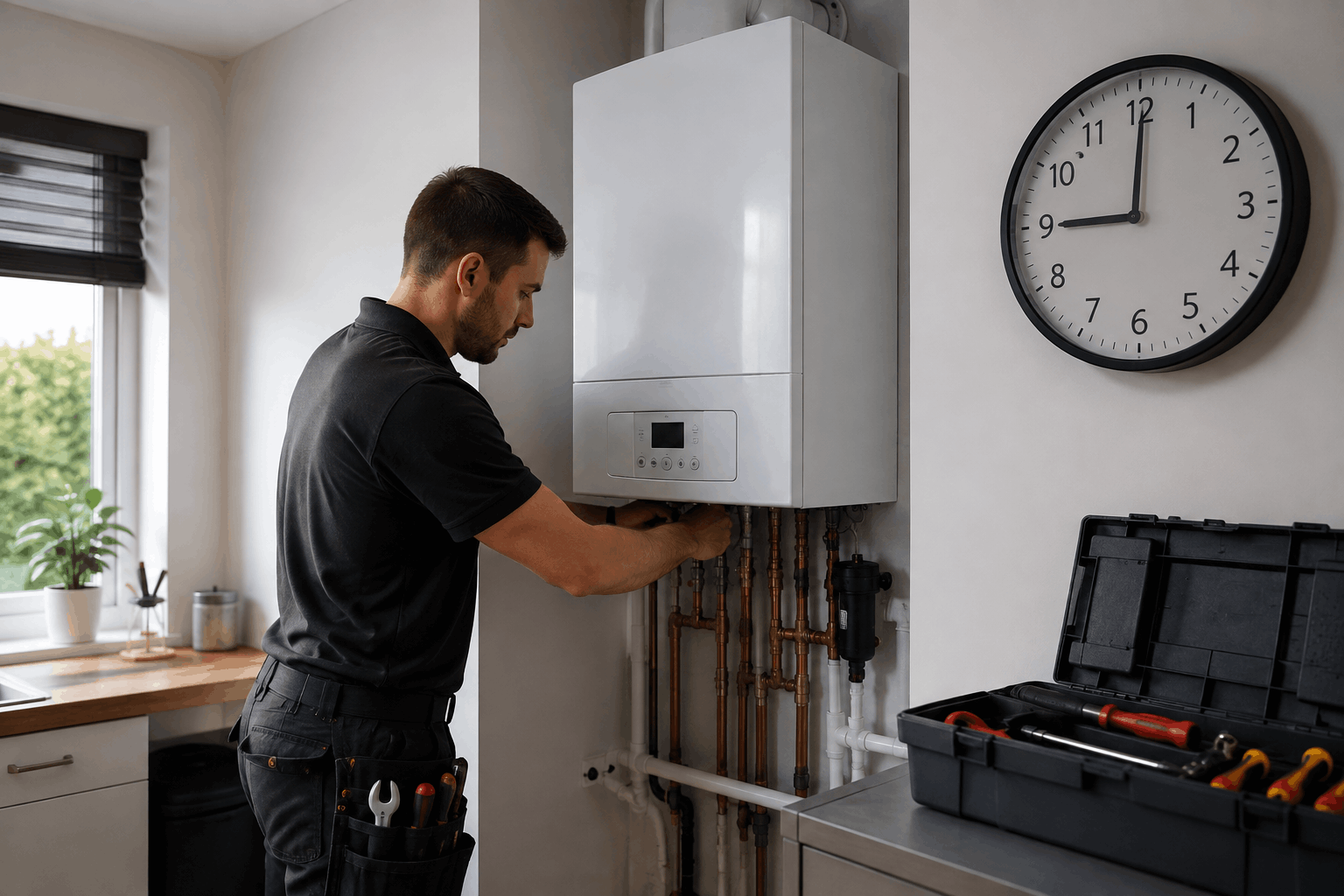
What Actually Happens During Boiler Installation?
Knowing what the engineer is doing makes the installation time easier to understand.
Preparing and Removing the Existing Boiler
The heating system first needs to be made safe before the old boiler can be disconnected.
Depending on the installation, the system may need to be drained. The engineer can then disconnect and remove the existing boiler and prepare the area for the replacement.
Preparing the Heating System
Installing a new boiler isn’t simply a matter of hanging a new appliance on the wall.
The condition of the existing central heating system also matters. Corrosion, sludge and debris can affect heating performance.
Energy Saving Trust advises that chemical inhibitors help reduce corrosion and prevent sludge and scale build-up. It also notes that inhibitors should be refreshed or replaced when the heating system is drained during boiler replacement.
Installing the New Boiler
The new boiler is then positioned and connected to the necessary services.
Exactly what this involves depends on the property and boiler type, but it can include connections for gas, water, central heating, condensate drainage, controls and the flue.
A straightforward replacement makes this stage relatively quick. Significant alterations to existing services naturally extend the installation.
Testing and Commissioning
Finishing the physical installation doesn’t mean the engineer simply switches the boiler on and leaves.
The system needs to be properly tested and commissioned so that it operates safely and correctly.
The installer should also explain how to operate the boiler and its controls. Don’t skip this part because you’re keen to get the house back to normal. Understanding your programmer, thermostat and boiler settings can make a meaningful difference to how you use your heating.
What Can Make Boiler Installation Take Longer?
Several seemingly small issues can turn a one-day installation into a longer job.
Old or Unsuitable Pipework
Older properties sometimes contain pipework that isn’t suitable for the proposed installation. Sections may need to be replaced, rerouted or upgraded before the new boiler can be commissioned.
Flue Changes
A replacement boiler may require a different flue arrangement from the existing appliance.
If the new flue can’t simply use the previous route, additional work may be necessary to create a compliant installation.
Difficult Access
A boiler tucked into a cramped cupboard or difficult loft space can take longer to remove and replace than one installed in an easily accessible utility room.
Access also affects pipework and flue installation.
Heating System Problems
Existing issues may only become obvious once work begins.
For example, ageing valves, heavily contaminated heating water or damaged components elsewhere in the system may require attention. This doesn’t necessarily mean something has gone wrong with the installation; it can simply reveal problems that were already present.
New Heating Controls
Replacing a boiler is also a good opportunity to review your heating controls.
Energy Saving Trust says boiler-based central heating systems should include at least a programmer, a room thermostat and thermostatic radiator valves (TRVs). More advanced controls may also be suitable depending on the property and heating arrangement.
Adding or upgrading controls may slightly increase installation time, particularly if wiring or radiator valves need alteration.
Will You Be Without Heating and Hot Water?
For at least part of the installation, yes.
Your existing boiler has to be disconnected before the replacement can be installed and commissioned, so heating and hot water supplied by the boiler won’t normally remain available throughout the work.
With a one-day replacement, disruption may only last for that working day. A larger conversion could leave the heating system unavailable for longer.
This is worth discussing beforehand if you have young children, older family members or anyone in the household who is particularly affected by cold conditions.
If the installation is taking place during winter, ask the installer exactly when they expect the heating and hot water to be restored.
How to Prepare for Boiler Installation
You don’t need to turn your house upside down before the engineer arrives, but a little preparation can save time.
Clear the space around the boiler and make sure the installer can easily access relevant cupboards, radiators, controls and pipework.
If the boiler is inside a kitchen cupboard, remove anything stored around it. Similarly, if access is needed to a loft, airing cupboard or hot water cylinder, make sure the route isn’t blocked.
It’s also sensible to discuss these points before installation day:
- Where the new boiler will be positioned
- Whether the boiler type is changing
- Whether any tanks or cylinders are being removed
- What heating controls are included
- Whether pipework needs altering
- Expected installation duration
- When heating and hot water should return
- What paperwork you’ll receive afterwards
A proper survey or detailed discussion beforehand reduces the chance of unpleasant surprises halfway through the job.
Make Sure the Right Installer Carries Out the Work
For a gas or LPG boiler, the installer must be Gas Safe registered. Energy Saving Trust also recommends obtaining several quotes and notes that the installer should ensure the system complies with current building regulations and provide the appropriate documentation.
Keep any certificates and installation documents somewhere safe. They may be important for warranty purposes, future servicing and when you eventually sell the property.
For an oil-fired boiler, the requirements differ, and using an appropriately registered and competent installer is important.
Don’t Judge an Installation Only by Speed
Nobody wants several days of engineers, tools and temporarily unavailable heating, but the fastest quote isn’t automatically the best one.
A competent installation involves more than replacing the visible box on the wall.
The engineer needs enough time to deal properly with the heating system, connections, flue, controls, testing and commissioning. If additional work is genuinely required, allowing another day is far preferable to rushing an important part of your home’s heating system.
When comparing quotes, ask installers what is actually included rather than simply asking, “How quickly can you do it?”
Questions to Ask Before Booking Your Installation
Before accepting a quotation, get a clear idea of what will happen on the day.
Useful questions include:
- How many days should my installation take?
- Will my boiler remain in the same location?
- Does existing pipework need changing?
- Are you changing the boiler type?
- Will the heating system need cleaning?
- Are new heating controls included?
- Will any tanks or cylinders be removed?
- When should heating and hot water be available again?
- What happens if additional problems are discovered?
- What certificates and warranty documents will I receive?
A detailed quotation should make it easier to understand why one installer expects a single-day job while another expects two.
Conclusion
So, how long does a boiler installation take? For a straightforward like-for-like replacement, you can generally expect the work to take around one working day. If the boiler is being relocated, pipework requires substantial alteration or you’re converting from one boiler system to another, the installation could take two to three days or longer.
Every property is slightly different, so the most useful estimate will come after an installer has assessed your existing heating system and understood exactly what you want to change.
Rather than focusing purely on getting the boiler fitted as quickly as possible, focus on getting the job done properly. A well-planned installation, suitable controls and correct commissioning will matter long after the engineer has packed away the tools.